Every garage door is counterbalanced by springs, because a 200-pound door needs to feel like ten pounds in your hands. There are two systems, and telling them apart takes five seconds.
How to tell which you have
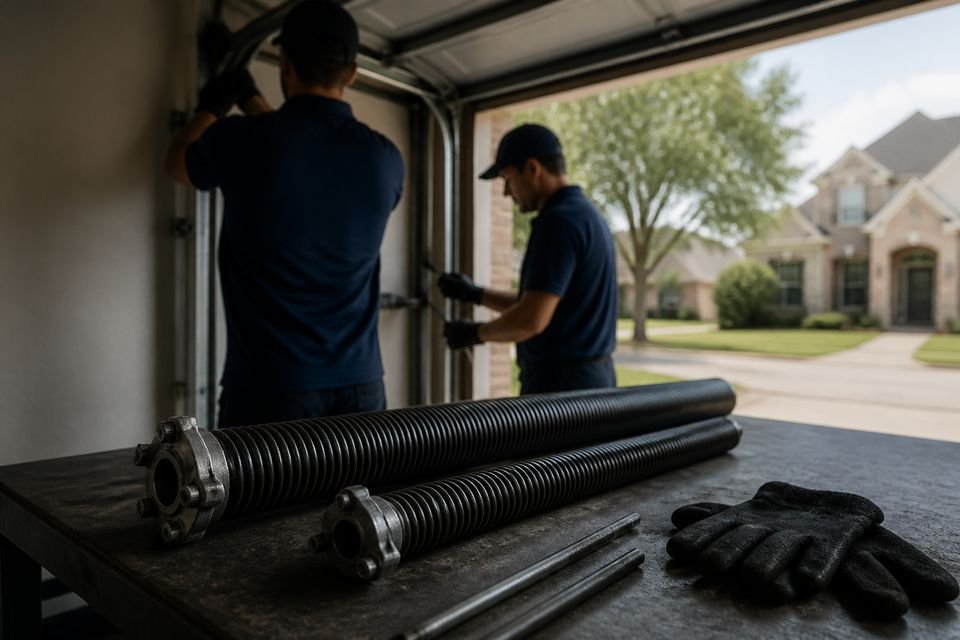
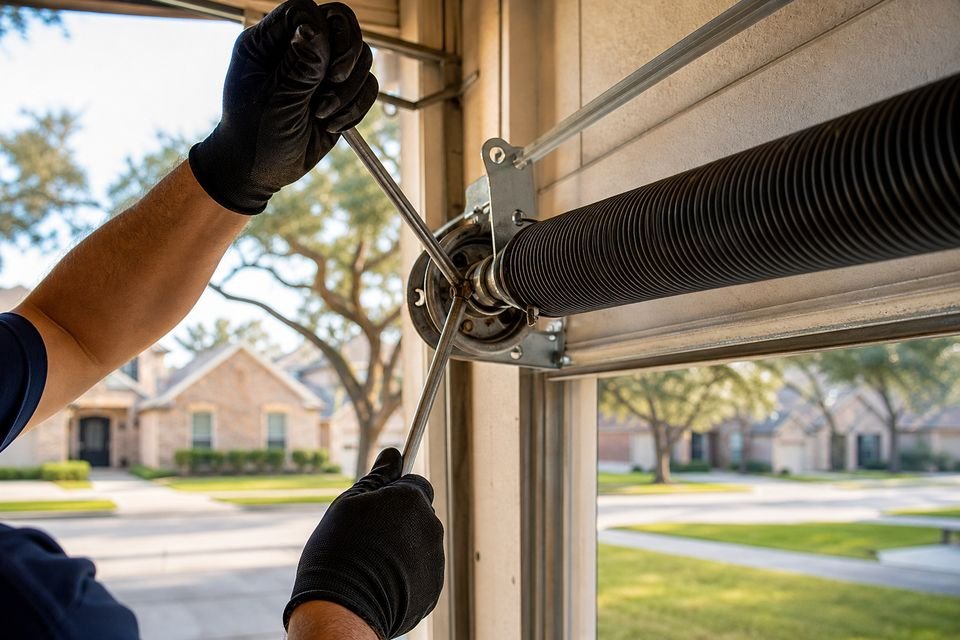
Torsion springs mount on a steel bar directly above the door opening, running horizontally. One or two fat coils, wound tight.
Extension springs run parallel to the horizontal tracks, one along each side, stretching and contracting as the door moves. Long, thinner springs.
Torsion: the modern standard
- Better balance and smoother travel through the whole cycle
- Longer life — 10,000 cycles standard, 25,000 available
- Contained failure: when it breaks, it stays on the bar
- Works on heavy doors that extension springs cannot handle
- Costs more up front and needs headroom above the opening
Extension: the older system
- Cheaper, and it fits where there is no headroom for a torsion bar
- Less consistent balance, particularly near the top of travel
- Dangerous failure mode without containment cables. An unrestrained extension spring under tension becomes a projectile when it snaps
- Shorter life and more wear on the rest of the hardware
If you have extension springs, look for a steel cable running through the centre of each one. That is the containment cable, and it is what stops a broken spring crossing the garage. If it is missing, that is worth fixing this week — it is inexpensive, and we fit them as standard whenever we find a door without them.
Should you convert to torsion?
If you have adequate headroom above the opening — around twelve inches for standard track — conversion is usually worth it on a door you plan to keep. Better balance, longer life, safer failure. Budget roughly $350 to $600 for the conversion including the bar, drums, cables and springs.
If you do not have the headroom, low-headroom torsion kits exist, or you keep extension springs and make absolutely certain the containment cables are in place and in good condition.
Either way: replace in pairs
Both springs went on the same day and have taken the same cycles. Replacing one leaves you with a matched pair of "new" and "about to fail", plus an unbalanced door that starts working on your opener. This is the single most common corner cut in the trade and it never saves anyone money.
Written by the Houston's Best Garage Door team. We have been repairing garage doors across Greater Houston since 2011 — 21,000+ doors and counting. Everything above comes from what we actually find in Houston driveways, not from a manufacturer's brochure.
Questions about your own door? Call or text (713) 555-0142 — the phone call is free whether or not you book anything.