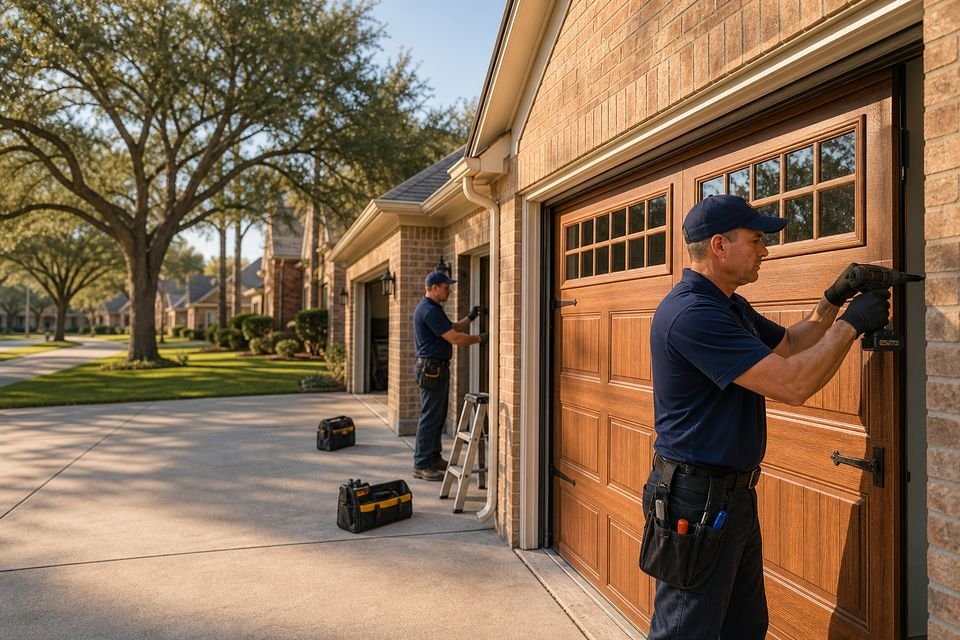
Almost every emergency call we run was visible months earlier to anyone who knew where to look. Here is where to look. None of this requires touching a spring or a cable.
Twice a year: the twenty-minute pass
- Watch and listen to a full cycle. Stand inside, run the door up and down, and watch the rollers, cables and track. Grinding, popping, jerking or a hitch in the same spot every time all mean something.
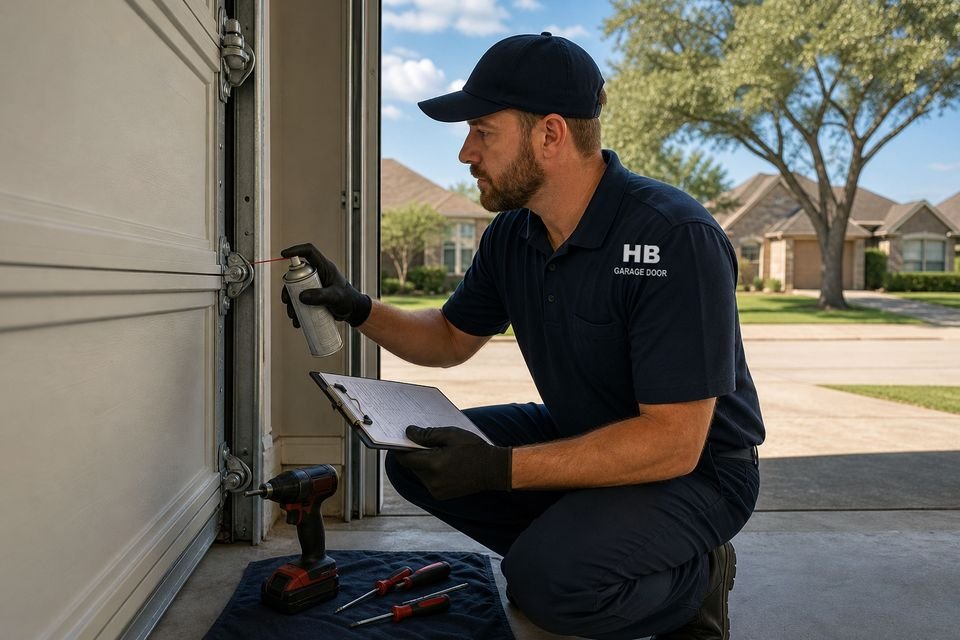
- Lubricate properly. Hinges, roller bearings, spring coils, the torsion bar bearings and the opener rail. Use a garage-door-specific synthetic lubricant. Do not use WD-40 anywhere — it is a solvent, it strips the grease that was already there, and it makes things worse a month later.
- Do not lubricate the track. Rollers should roll along the track, not slide. Wipe it clean with a dry rag instead.
- Torque the hardware. A door cycling 1,500 times a year shakes every lag bolt and hinge nut loose. Snug them with a socket — firm, not gorilla-tight.
- Inspect the cables. Look at both, top to bottom, especially where they meet the bottom bracket. Any fraying, kinking or rust means call before it breaks.
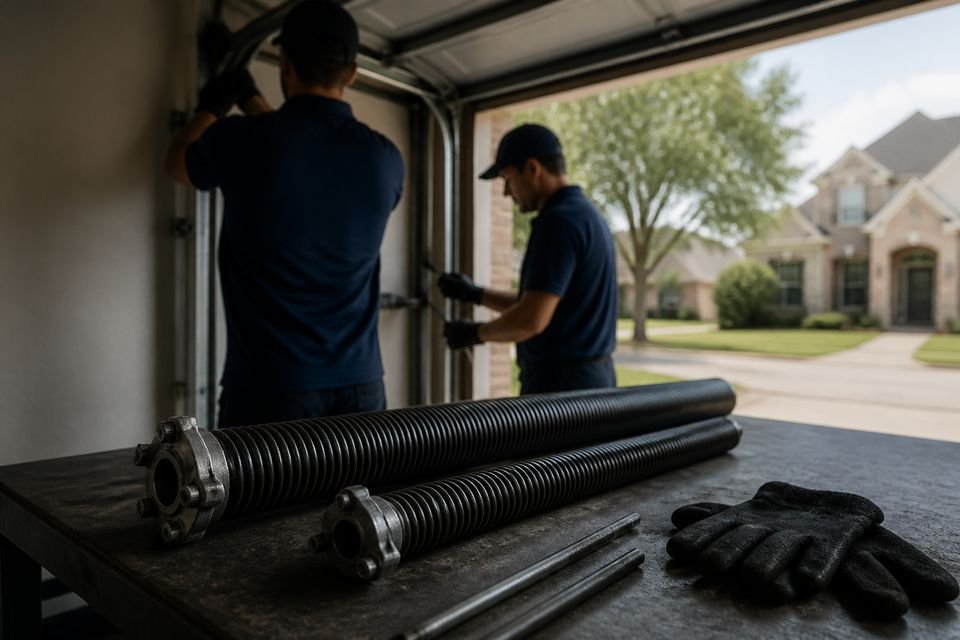
- Inspect the springs. Look for gaps in the coil, and for rust. In Houston, expect some rust; treat it as a lubrication reminder, not a crisis.
- Check the bottom seal. Hardened, cracked or curled seals let in water, wind and palmetto bugs. A $40 part.
- Clean the sensor lenses and confirm both LEDs are steady.
The two tests that matter most
The balance test. Close the door, pull the emergency release cord, and lift the door by hand to about waist height. Let go. A correctly balanced door stays put. If it slides down, the springs are weak; if it flies up, they are over-tensioned. Either way the opener is compensating on every cycle, and it will not do that forever.
The auto-reverse test. Lay a 2x4 flat on the floor in the door's path and close the door with the opener. It must contact the wood and reverse immediately. Then wave a broom through the photo-eye beam while it closes — it must reverse then too. If either test fails, stop using the door and call. That system is the only thing standing between a closing door and a child.
The Houston-specific additions
- After any flooding, check the opener logic board, the low-mounted sensor wiring and the bottom brackets. Water damage shows up weeks later, not immediately.
- Near the bay, add a second lubrication pass — salt air does not take the summer off.
- Before hurricane season, confirm your track anchoring and check whether your door has a wind rating at all.
- In August, if the opener starts cutting out, it is probably thermal protection in a 130°F garage — but it can also mean the door is dragging and the motor is overworking.
What to leave alone
Springs, cables, drums and the bottom brackets. All four are under full spring tension, all four have hurt people, and all four are inside the $79 tune-up anyway. Everything on the list above is safe; those four are not.
Written by the Houston's Best Garage Door team. We have been repairing garage doors across Greater Houston since 2011 — 21,000+ doors and counting. Everything above comes from what we actually find in Houston driveways, not from a manufacturer's brochure.
Questions about your own door? Call or text (713) 555-0142 — the phone call is free whether or not you book anything.