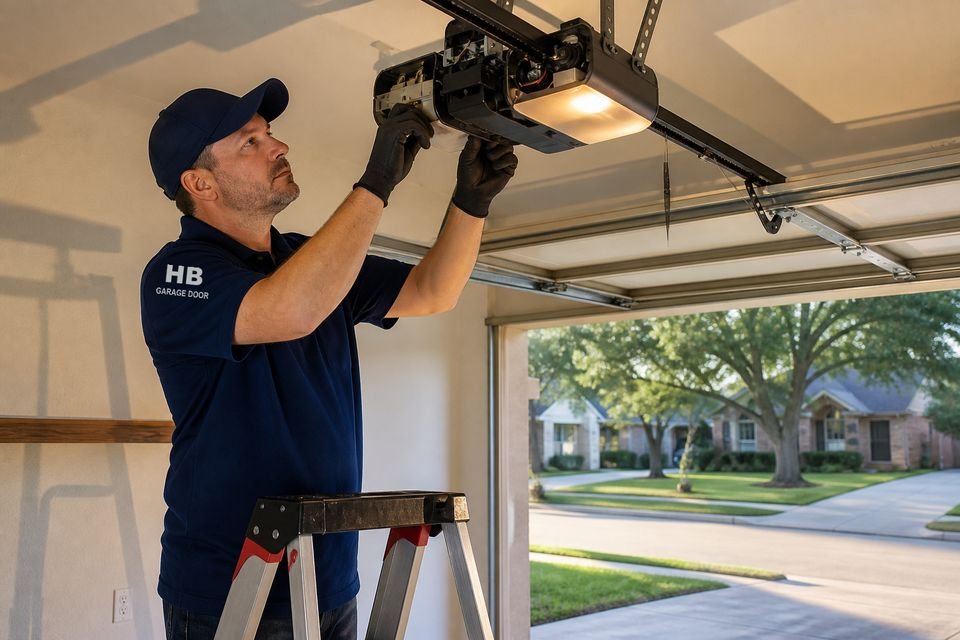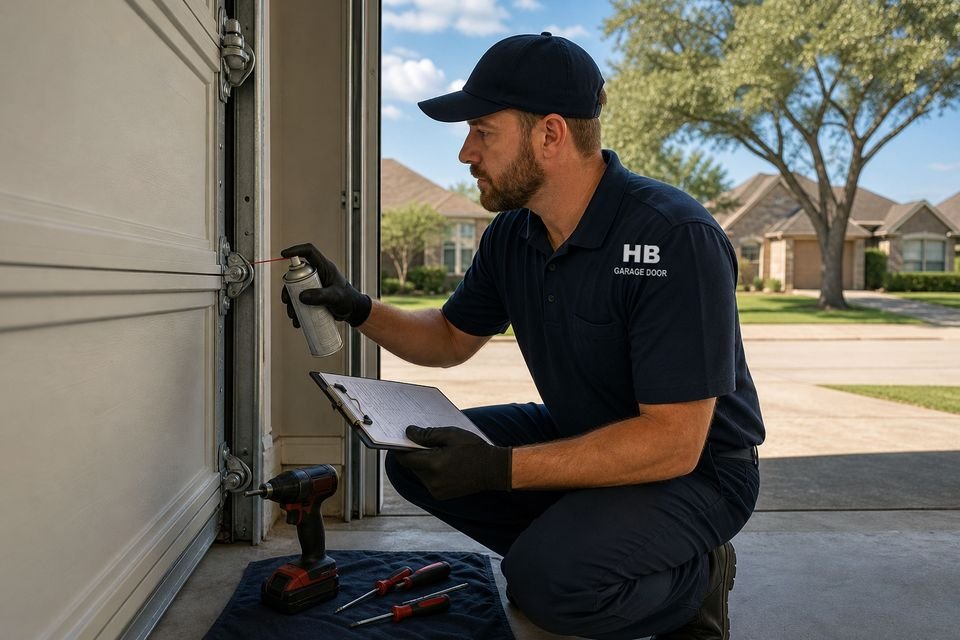
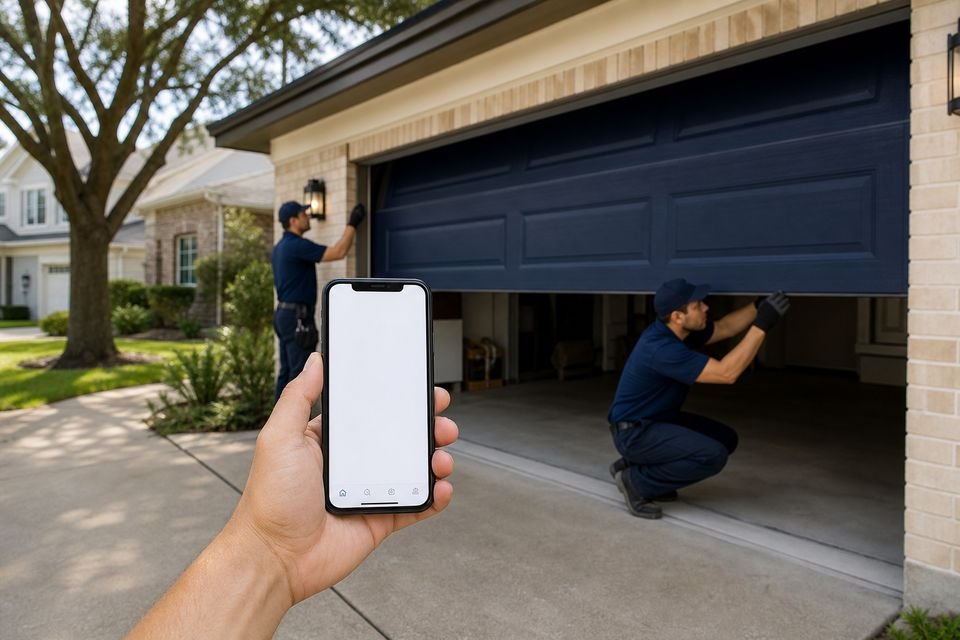
The garage is the most-used entrance in most Houston homes and the least-secured. Three specific vulnerabilities account for most of the risk, and only one of them is solved by buying a smart opener.
1. Fixed-code remotes
Garage door openers made before 1993 use fixed codes — the same signal every time. Devices that capture and replay that signal are cheap and legal to own. If your opener predates 1993, the code can be copied from the street. It also has no auto-reverse safety, so it should be replaced on both counts.
Modern units use rolling-code encryption: the code changes on every press and a captured signal is useless. This is the single biggest security upgrade available, and it comes free with any new opener.
2. The emergency release cord
The red cord that disconnects the trolley can be reached from outside on many doors by pushing a coat hanger through the gap at the top of the door. It is a well-known method and it takes seconds.
The fixes are simple and cheap: fit a release-cord shield, shorten the cord so it cannot be hooked, or use a zip tie rated to break under deliberate hand pressure but not a wire hook. Any of the three closes it. We fit shields as part of a tune-up on request.
3. Doors left open
Statistically the most common garage-related break-in is the simplest one: an open door and an unlocked interior door. This is the vulnerability a smart opener genuinely solves — alerts when it opens, remote close from anywhere, and a timed auto-close so a door left open at 5pm shuts itself at dark.
What a smart opener gives you
- Push alerts on open and close, per user
- Close it from anywhere — the Houston traffic question, answered
- Timed auto-close so it never stays open overnight
- A log of every cycle, useful for teenagers, rentals and contractors
- Temporary guest access you can revoke, instead of a keypad code you have to change
- Integration with Apple Home, Google Home, Alexa and HomeLink
The security of the smart system itself
The usual question is whether a connected opener is a new attack surface. In practice the account is the weak point, not the protocol: use a unique strong password, turn on two-factor authentication, and remove old users when they no longer need access. That is a much smaller risk than a fixed-code remote or a coat hanger.
The rest of the layer
Lock the interior door from the garage into the house — most people never do, and it is the door that actually protects the house. Do not leave a spare car remote clipped to a visor in a car parked outside. And if the garage has windows, frost or cover them; knowing whether a car is home is most of the reconnaissance.
Written by the Houston's Best Garage Door team. We have been repairing garage doors across Greater Houston since 2011 — 21,000+ doors and counting. Everything above comes from what we actually find in Houston driveways, not from a manufacturer's brochure.
Questions about your own door? Call or text (713) 555-0142 — the phone call is free whether or not you book anything.